
[INTERVIEW] sakukaru online
This article was originally published on “sabukaru online” in April 2020.
“meanswhile,” featured here, is part of a series that examines functional clothing by focusing on designers and brands in the fashion industry that prioritize advanced materials and special functions.
Functional clothing is clothing that makes everyday life more comfortable. Warmth on a cold winter night, breathability on a hot summer day, waterproofing when you get caught in the rain on your commute — whatever the situation, functional clothing refers to wear that can handle the unexpected scenarios life throws at us.

With functional clothing, the value of design is not found in ideas that resonate on paper or in trends that rack up “likes” on social media. Its value lies in the integrity with which it can effectively serve its purpose. That is why, when choosing functional clothing, both newcomers and seasoned enthusiasts care about one question: in what situations will this garment be useful? In other words, is it practical?

If there is one brand that best embodies functionality and refined design, it would be meanswhile. Founded by Naohiro Fujisaki in 2014, meanswhile has since built its reputation on highly practical clothing balanced with a forward-looking vision — wearable, yet backed by experimental exploration.
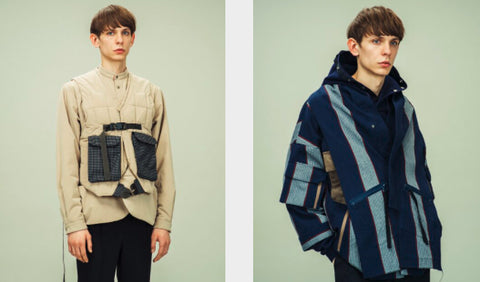
Highly regarded for its technology-driven use of materials, meanswhile fuses high-performance outdoor wear with Japanese styling that spans a wide range of silhouettes, from modern to traditional. Fujisaki’s design approach also boldly tests the boundaries of wearability, incorporating progressive elements such as convertible details and maximal proportions. With its own twists on traditional silhouettes and contemporary practicality, and its colorful textiles and fabric treatments, the brand is embraced by both outdoor enthusiasts and urban commuters.

What gives Fujisaki a unique position in the industry is that meanswhile is clearly a concept-driven brand. Browsing meanswhile’s web store and social media accounts, you encounter two concepts that clearly express its design philosophy: “clothing as tools” and “design as a means, not an end.” For our series on functional clothing, these two mottos immediately caught our attention — not only for the insight they offer into Fujisaki’s unique view of design, but also for how they explain why practicality defines the spirit of functional wear and is the value it is sought for.

The way meanswhile’s concepts reflect the ethos of functional wear is that the idea of “clothing as tools” suggests clothing should exist in the same way as tools. Like a carpenter’s saw, clothing should deepen our engagement with the world by helping us achieve our daily goals, not get in the way. The idea that “design is a means, not an end” suggests that design should not be valued simply for its beauty, but for the function it is meant to serve.
Just like the design of tools, the design of clothing should be strengthened by the specific demands we are likely to place on it throughout the day.


These two concepts clearly articulate the functional clothing movement: “the design of clothing should be guided by its actual intended use.”
Now let’s take a closer look at meanswhile’s work to see how the principles of functional design are reflected in the making of clothes.


When it comes to the use of technical and advanced materials, meanswhile’s 2018 Autumn/Winter collection offers countless examples. In this collection, Fujisaki made use of modern performance materials such as Ventile cotton and X-PAC canvas. X-PAC canvas is a lightweight, tear-resistant cotton that keeps the overall weight of the textile to a minimum, while Ventile cotton is a waterproof material with high breathability. A signature item using these textiles is the X-PAC Luggage Vest.
These materials equip the garment for a wide range of situations, from heavy rain to unexpected impacts from scraping against walls. It also features high-capacity pockets and is designed like a bag that can be accessed from the front. These advanced materials were showcased across a variety of products, including pants, jackets, button-downs and backpacks.

meanswhile 2018 AW Collection from meanswhile on Vimeo.

Functional clothing is not determined by materials alone; function can also be built in at the design level. A striking example is the “SOLOTEX Reversible 4WAY Jacket” from the 2018 Spring/Summer collection. In terms of materials, this 4-way jacket uses SOLOTEX and MVS yarn. SOLOTEX has a spring-like structure that makes textiles more comfortable to wear, with a soft, stretchy hand and gentle cushioning, while MVS yarn has a special structure that is quick-drying, pill-resistant and wrinkle-resistant. And unlike a typical 2-way reversible jacket, the brand developed an origami-like 4-way jacket that can be worn four different ways by turning it inside out from the hem in a specific manner. This design is not only excellent from a design standpoint but also highly practical, packing four styles into one jacket. Such versatility in a single garment is sure to come in handy when traveling and you want to pack as light as possible.

After touring meanswhile’s headquarters in Tokyo, we had the opportunity to ask Naohiro Fujisaki some questions. In the interview, he spoke about a wide range of topics, from his student days to his creative process and the future of the fashion industry. For more on the journey of meanswhile and Naohiro Fujisaki, read the interview below.
Tell us about your origins. What got you interested in design and fashion?
When I was in high school, I used to remake clothes I found at thrift stores and my parents’ clothes. That may have been the starting point, but I only became seriously conscious of design after entering a fashion college.

What were you doing before you launched the brand?
After graduating from university, I joined a collection brand and worked in various assistant roles, including production and pattern making. I then moved to a street brand, where I also had experience launching a new brand. During that time, I worked on designing a backpack in my spare time, and when it was finished, I decided to launch my own brand. It took three years and countless revisions before I made something I was satisfied with.


What made you decide to become a designer? And where does the name meanswhile come from?
To be honest, I never thought about becoming a designer. I just liked making things and thought it would be nice if I could make a living from it. My father was an artist, so I think seeing him work led me naturally to do something similar.
The “mean” in the brand name corresponds to the Japanese word for “meaning” — I want every product I make to have meaning. “Means” signifies that design is not the final goal but a process. These two ideas were rarely seen in the contemporary fashion industry. Once I decided to compete in the fashion market, the mainstream would be the conventional fashion industry. Because I wanted to compete with a slightly different methodology, I created a coined word combining the two words above with “meanwhile,” which means “on the other hand” or “elsewhere.”


Did you study design? If so, was functionality a common theme when you became interested in a career in fashion?
I studied clothing design at university. When I entered university, my father told me just one thing: “Observe natural things carefully.” Natural things have taken the shapes they were bound to take. Everything has meaning and takes form for a reason. Thanks to those words, I think I developed the habit of learning about design from all kinds of things in everyday life.
There were already many functional brands back then. I liked those brands and researched them a lot, so maybe it just seemed like there were many.
What can be said of all those brands is that they weren’t doing functional clothing “because it was trendy.” I don’t think the brands that were just riding the trend are still around today.
Tell us about your focus on practical, functional clothing. What does this brand concept mean for your design practice, and for ours?
By nature, design is 100% accompanied by function. This is the most basic principle for anyone involved in design, but it is not often seen among fashion designers.
If you think along the fundamentals of design, the functional aspects naturally become important.
At meanswhile, there are times when we emphasize those functional aspects and times when we build them in so they aren’t apparent at first glance from the outside, and we value that balance.
Your designs consistently draw attention. Where does your design inspiration come from?
Thank you. I often get inspiration from everyday life. As I mentioned in my earlier answer, I also often get inspiration from nature. For example, as a plant grows, its leaves come out alternately. This is to receive more sunlight, and exploring those “why?” and “how come?” questions often connects to flashes of inspiration when I make something. Of course, I also draw a lot of inspiration from man-made things such as architecture and product design.
In our research, we came across the concepts “clothing as tools” and “design is a means, not an end,” which were very thought-provoking. As a designer, what led you to this unique way of seeing clothing?
I think of clothing in two categories: everyday goods and costumes. When I was a university student, I designed a wedding dress and won first place in Japan in a design competition. For women, a wedding dress is something worn on a special day, and I consider it a costume. For a long time I thought only about clothes worn on special days, so I began to think about what everyday clothes should be and how they should be used as everyday goods (tools). That is the concept of this brand. Having experienced design in both fields allowed me to approach the idea of “clothing as tools” from my own perspective.
Many of the design choices and silhouettes meanswhile releases are perfect examples of balancing the traditional and the contemporary. What does meanswhile do to achieve this harmony?
That balance is very important. When it comes to design details, for example, many designers are inspired by used clothing and vintage. I’m one of them. However, I think reproducing the details of clothes from 100 years ago exactly as they were today is the same as cosplay. Clothes from 100 years ago have details made to suit the lifestyles of that time. Today, what we carry and how we get around have completely changed, so designing to match that results in a different look. In my work, I try to make traditional details relevant to the present by infusing them with new functionality and purpose.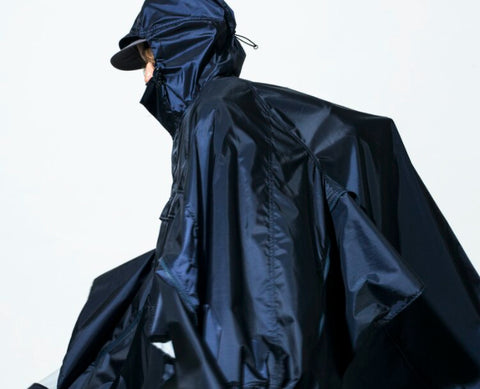

master-piece, KIDS LOVE GAITE, Danner and Less Taiwan — all the collaborations you’ve done so far share values similar to meanswhile’s. Is there anything you prioritize when deciding on a collaboration?
When deciding on a collaboration, I’m not necessarily looking for brands with the same vision. Rather, I consider whether they have new (different) values. So far, by applying meanswhile’s design philosophy to collaborations, we have been able to make many interesting things without blurring the brand’s identity, and I want to continue doing so.
meanswhile seems to be loved by both outdoor types and city dwellers. What in your designs is able to bring together such different people, who in a sense lead opposite lives?
Our concept of “tools” was initially embraced early on by people who love the outdoors, but at the same time, the popularity of outdoor functionality had already taken root among city dwellers. From there, outdoor wear evolved toward people more particular about style, blurring the line between “outdoor” and “urban.” I think our success is largely due to a market that was ready to accept this new boundary.

Is bringing people together through shared tastes and interests intentional for the brand? Or is it an unintended by-product of design done right?
It isn’t intentional, but I’m happy that it’s turning out that way.
That said, my goal, regardless of genre or category, is to give people new values regarding clothing.
In the city, quite a few people enjoy the outdoors as a hobby, so I hope choosing clothes to suit a variety of lifestyles becomes more commonplace.

Is there a season or a product that is particularly memorable or special to you?
There are quite a few things I’m proud of, such as winning the “Tokyo New Designer Fashion Grand Prix” and the “TOKYO FASHION AWARD.” The collaboration with Nike is also memorable.

Please tell us the highlights of this collection and your outlook for next season.
There are many, but I recommend the collaboration boots with Danner and the anorak jacket. We update them little by little each season, and they have now become staple items.

Most of the stores carrying your products are in Asia. Will people in Europe and North America be able to experience your world soon?
Perhaps for geographical reasons, shops in Asia were the first to show interest in us. As early as our second season, we received inquiries from shops in Taiwan, Hong Kong, Korea and elsewhere, and many of them still carry our products today. There have been twists and turns, but I think these long relationships have contributed greatly to our growth. We have a dealer in Europe, but we haven’t yet entered North America. I see this as our next challenge.

You recently worked with Nike and Hypebeast. What was that project like?
When Hypebeast’s director first approached me about this project, I couldn’t believe it. Working with such a globally established brand was a great experience. I was told I could make anything I liked, so I decided to make something more like a work of art than a product. As a result, the production cost of the whole outfit came to ten times that of a regular collection.

NIKE × meanswhile × HYPEBEAST from meanswhile on Vimeo.

As it was a collaboration commemorating Nike Air Max Day, I designed it around the theme of the Air Max.
I felt the defining feature of this shoe is not that it contains air, but its design that “visualizes” the air through a transparent window.
So I made it with the concept of visualizing functionality, which is a hallmark of meanswhile.
Using watch-window parts, the design deliberately reveals structural parts of the garment that are normally hidden, such as how cords, tapes and reflectors are attached.
We are considering selling it, but nothing has been decided yet. The price of a single piece would be staggering…

In a recent interview, you were asked how meanswhile was affected by the coronavirus. In it, you said, “Even before this happened, the fashion industry had already reached a point where change was needed...” What kind of change do you think the fashion industry needed?
The current fashion industry has grown by putting a “trend” expiration date on clothes that don’t spoil quickly and getting people to buy new items every six months. Making new things is not bad, but it’s also not good that things mass-produced unnecessarily are thrown away in large quantities. As consumers, it’s important to buy things that suit our own lifestyles without being swayed by trends. I believe such lifestyle choices shape our individuality and make us unique. I make things, but selling a lot is not necessarily my goal. I hope to convey meanswhile’s ideas and philosophy and, through them, offer an opportunity to think about what fashion should be.

Can you tell us more specifically how the fashion industry needs to change?
This overlaps with my previous answer, but I think we have to start by changing the values of the people involved in fashion. The word “sustainable” has taken hold in Japan as well, but not many people think about its essence. Using sustainable materials, launching eco-friendly brands — in the end, selling is the biggest goal. I don’t think there is value in producing just to sell. We are trying to consume, once again as a trend, a proposition essential for humanity to keep living on this planet. Instead, we must let that way of thinking take root. When I started the brand, the word “sustainability” wasn’t widespread, but I hope my idea of “clothing as tools” spreads and helps reduce the world’s problems.

What does the future of fashion look like to you? And where will it stand in the next few years?
I don’t know about the future. I can’t imagine whether fashion will become like a traditional performing art, entertainment for a very small number of people, or take an entirely different form and mingle with the masses.
Everything has a history and a context that follows it. Things are born because they existed in that time and place, and meanswhile is a brand created with that way of thinking.
The brand started as a way of raising questions about the current state of fashion, so if the times change significantly, I think it would be fine for the brand’s role to end and lead on to the next context.
That said, I want to keep designing for the rest of my life, so I think I will continue creative work in response to the times in another form.

If there are design students reading this article, do you have any advice for them?
This is a difficult question, but I think you should first make clear whether you want to be an artist or a designer. Accept the questions and discomforts you feel in daily life, and decide whether you want to express them somehow or solve them. In a world changing at tremendous speed, it is young people who can respond most flexibly to that change. I can’t help but be excited to think about what wonderful creations will emerge from now on.
meanswhile’s progressive approach to functionality brings us back to basics in an enlightening yet simple way. This matters in two respects. First, Fujisaki’s thinking on design shows how clothing can make life more comfortable, making it an important asset to the industry — in other words, it helps us overcome the various problems life presents. Second, if we take a step back and think about why we wear clothes — the purpose of the particular garments we are interested in — we may be able to make decisions as conscious, informed consumers. And in a world overflowing with constant mass demand, cultivating ways to make more careful choices could be an effective solution for a fashion industry that lags behind in environmentally friendly practices and infrastructure. Naohiro Fujisaki and meanswhile embody the significance and necessity of functional clothing.